Insomniac Games has already made a convincing argument that it understands superheroes. Its Marvel’s Spider-Man games captured the joy of movement, the awkwardness of a secret identity and the sheer pleasure of throwing a well-timed punch at a criminal who really should have stayed home.
Marvel’s Wolverine is a different challenge. Spider-Man wants to save everyone. Wolverine is often trying to decide whether he should save anyone at all.
The latest gameplay and hands-on details suggest Insomniac is building its Wolverine game around that contradiction. This is not simply a power fantasy about slicing through enemies with adamantium claws. It is an action adventure about a violent man trying to work out whether his rage can be used for something better than destruction.
Logan is not starting from scratch
Marvel’s Wolverine follows James “Logan” Howlett, the mutant better known as Wolverine, in an original story created by Insomniac Games and Marvel Games.
The game begins with Logan having already stepped away from Team X, a mutant task force formed to protect people with powers. Three years later, he returns when the team is in serious trouble.
That crisis leads him into conflict with Bolivar Trask, a billionaire industrialist obsessed with human superiority. Trask is using the Reavers — a cybernetic militia armed with advanced weapons and implants — to capture and study mutants.
Jean Grey is part of the story too, appearing as a powerful telekinetic and an emerging leader among the captured mutants. The game also brings in Mystique, Sabretooth and Nathaniel Essex, giving Logan a group of allies and enemies who all have their own opinions about what mutants should become.
The claws are the easy part
The combat looks fast, brutal and heavily built around momentum. Logan can stalk enemies, ambush them from above or charge directly into a group with his claws already extended.
The game includes special Techniques such as Tornado Spin, Bull Rush and Knee Breaker. These can be upgraded and mapped to directional buttons, giving players more control over how Logan handles a fight.
There are also Adaptations, which improve long-term abilities such as Logan’s health and rage meter.
Rage is central to the system. Successful combos build the meter through three Rage Tiers, with each level changing how Wolverine fights. At higher tiers, his attacks become more powerful and critical strikes become available.
One ability, Last Stand, lets Logan use his rage to heal himself if he is fully downed. That is a fittingly Wolverine solution to a problem: become angrier until the injury becomes somebody else’s concern.
Wolverine can be quiet when he needs to be
Despite the emphasis on brutal combat, Marvel’s Wolverine is not a game about holding down the attack button until the controller files a complaint.
Logan has Enhanced Senses that allow him to track enemies and perform stealth takedowns. The hands-on material also shows him navigating areas protected by Ability Inhibitors, devices that can block Wolverine and his allies from using their powers.
That forces Logan to fight without healing or his full range of abilities while trying to destroy the inhibitors. He can still take punishment, but the game can change the terms of the fight and make players think before charging into a room filled with Reavers.
A globe-spanning mutant thriller
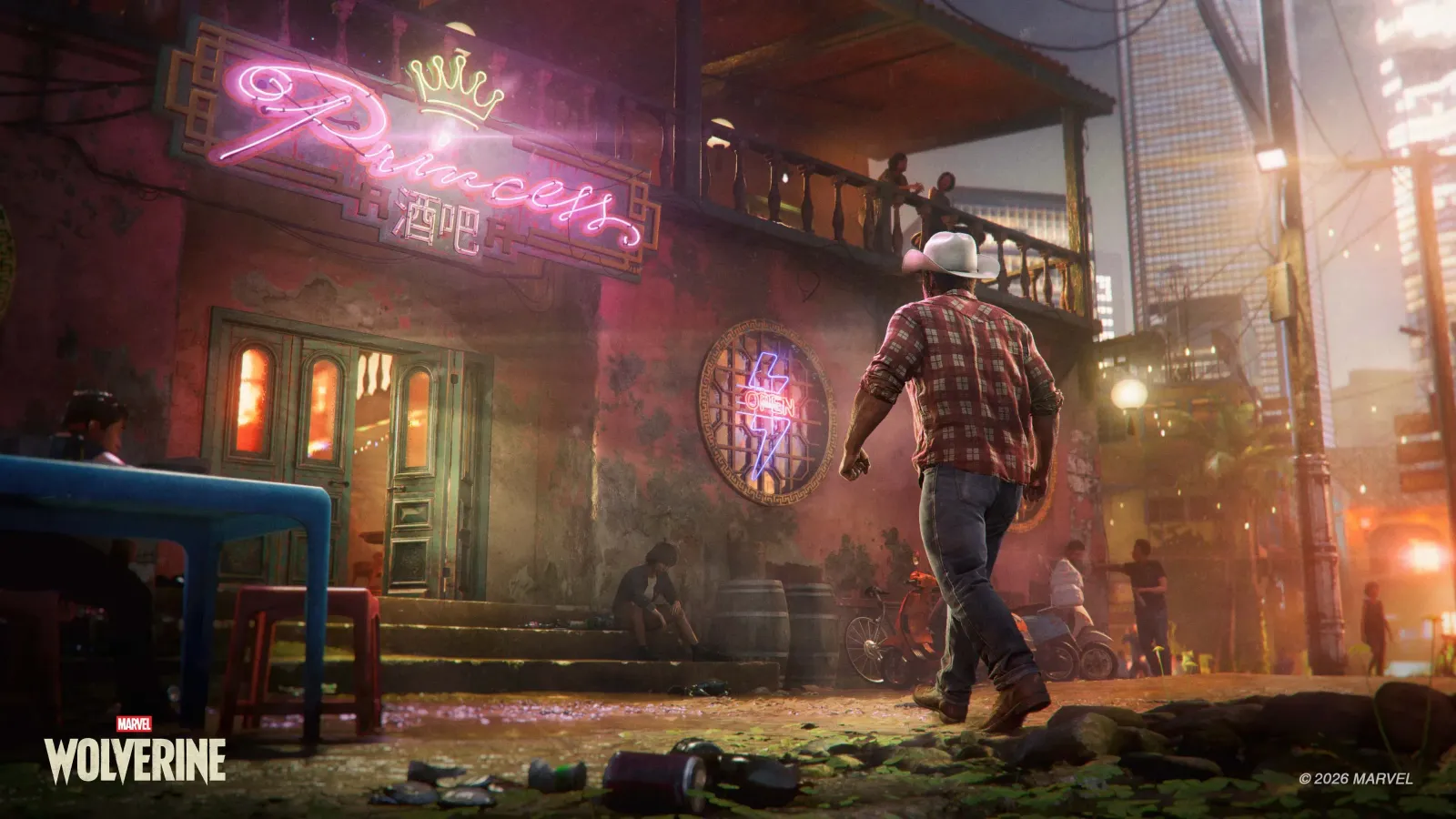
The game moves between several major locations, including the Canadian wilderness, Tokyo and Madripoor.
The opening mission takes place in the wilds of Telambang, where Logan reunites with Team X to infiltrate Trask’s facility and rescue captured mutants. From there, the story expands into Madripoor’s Lowtown and other locations connected to Logan’s past and the wider mutant conflict.
That structure should help the game avoid becoming another superhero story trapped in one city. Madripoor gives Insomniac room to explore a grimier, more lawless environment, while Tokyo offers a very different visual and combat setting.
The burden of making Wolverine playable
The hardest design problem is not making Wolverine powerful. It is making him powerful without making the game boring.
Logan heals. He has unbreakable claws. He is stronger, faster and more durable than most people he encounters. If the game is too easy, Wolverine stops feeling exciting. If it constantly finds ways to weaken him, players may wonder why they are not playing as a regular bloke with a very committed gym routine.
Insomniac’s answer appears to be variety. Rage Tiers make combat escalate. Techniques give players different ways to control space. Ability Inhibitors create moments where Wolverine has to fight without his usual advantages. Stealth and exploration slow down the action, while the story puts pressure on Logan’s emotional weaknesses rather than merely his physical ones.
A different kind of Marvel game
Marvel’s Wolverine arrives on 15 September 2026 for PlayStation 5 and is enhanced for PlayStation 5 Pro. The standard edition is listed at $69.99 in the US, while the Digital Deluxe Edition costs $79.99 and includes extra suits, claws, Technique Points and avatars.
The game is built specifically for the current PlayStation generation, with no PlayStation 4 version. It is rated Mature in the US for blood and gore, drug reference, intense violence, partial nudity and strong language.
Our opinion
Marvel’s Wolverine looks most interesting when it treats Logan’s violence as a character problem rather than a marketing feature.
The claws, rage meter and critical strikes are designed to make combat spectacular, but the stronger idea is the tension underneath them. Logan is trying to protect mutants while working alongside people who know exactly how dangerous he can be. Team X is a pressure cooker built around trust, resentment and the question of whether Logan can be relied upon when his instincts point towards destruction.
The global setting helps too. Canada, Tokyo and Madripoor connect to different parts of Wolverine’s identity: the wilderness, the outsider and the eternal fugitive.
Insomniac has a difficult balancing act ahead. It needs to make players feel unstoppable without removing tension, and make Wolverine’s brutality satisfying without confusing violence for depth.
So far, the studio appears to understand the assignment. Wolverine is not Spider-Man with worse manners. He is a survivor who has spent years turning pain into a weapon, and the real story will be whether he can finally decide what that weapon is for.